Table of Contents
ToggleRenovating a kitchen or bathroom isn’t just about picking out pretty tiles and calling it a day. It’s a multi-layered process involving layout decisions, material selections, plumbing considerations, and code compliance, and that’s before you even swing a hammer. A kitchen and bath design center exists to streamline this complexity, offering homeowners a one-stop resource for product selection, spatial planning, and expert guidance. Whether you’re gutting a 1970s galley kitchen or updating a cramped powder room, these centers provide the tools and expertise to turn rough ideas into actionable plans that fit both your vision and your home’s structural realities.
Key Takeaways
- A kitchen and bath design center provides expert layout services, 3D renderings, and material recommendations that help you avoid costly renovation mistakes before committing to a design.
- Walking into a design center lets you touch and test products in fully mocked-up rooms, giving you a realistic sense of how materials like countertops and tile will look in your actual space compared to online browsing.
- Design centers offer access to trade pricing, contractor networks, and project management services that can save you money and coordinate critical product lead times—especially important since custom cabinetry still runs 12–16 weeks.
- Before your appointment, bring room dimensions, photos from multiple angles, inspiration images with specific details, and information about your home’s structure (slab or crawlspace, electrical panel status) so the designer can create actionable plans.
- Choose a kitchen and bath design center with certified designers (NKBA or NCIDQ credentials), verify their product lines match your budget and preferences, and ask about lead times and return policies to ensure they align with your project timeline.
- Treat your designer as a collaborator by being upfront about budget and timeline, bring material samples home to view in your actual space under natural light, and involve your contractor early to ensure design choices align with practical installation needs.
What Is a Kitchen and Bath Design Center?
A kitchen and bath design center is a specialized showroom and consultation space where homeowners can explore cabinetry, countertops, fixtures, tile, and hardware in a full-scale setting. Unlike big-box stores with scattered displays, design centers arrange products in fully mocked-up kitchens and bathrooms, allowing you to see how quartz countertops pair with shaker-style cabinets, or how subway tile looks against brushed nickel fixtures.
Most centers employ in-house designers who provide layout services, 3D renderings, and material recommendations based on your space’s dimensions and your functional needs. They’ll measure your existing room, assess plumbing and electrical placement, and flag potential issues like load-bearing walls or inadequate venting before you commit to a design.
Some design centers are affiliated with specific manufacturers (think Kohler or KraftMaid showrooms), while others are independent and carry multiple brands. Independent centers offer more flexibility in mixing and matching products, but manufacturer showrooms provide deeper product knowledge and sometimes exclusive finishes or early access to new lines.
Why Visit a Kitchen and Bath Design Center for Your Renovation
Walking into a design center beats scrolling through Pinterest boards for one simple reason: you can touch, open, and test everything. Cabinet hinges feel different in your hand than they look online. Countertop samples under showroom lighting won’t necessarily match your north-facing kitchen at 7 a.m.
Beyond tactile exploration, design centers help you avoid costly mistakes. A designer can spot that your dream 36-inch farmhouse sink won’t fit your existing cabinet run without major modifications, or that your preferred tile requires a Schluter underlayment system your contractor didn’t budget for. They’ll also coordinate product lead times, critical in 2026, as some custom cabinetry still runs 12–16 weeks out, and certain imported tile can take even longer.
Another advantage: access to trade pricing. Many design centers offer contractor-level discounts if you’re working with a licensed pro, or they can connect you with vetted installers in their network. This isn’t a universal rule, but it’s common enough to ask about upfront. Some centers also provide project management services, coordinating deliveries and interfacing with your contractor so you don’t have to chase down shipments or reconcile product specs.
What to Expect During Your Design Center Visit
Your first visit will likely start with a consultation, either a brief walkthrough if you’re browsing, or a scheduled appointment if you’re ready to plan. Bring your room’s dimensions (length, width, ceiling height), photos of the existing space, and notes on what frustrates you about the current layout. If you’re tackling a kitchen, mention how you cook: someone who bakes weekly needs different storage than someone who meal-preps on Sundays.
The designer will ask about your budget. Be honest. A good designer won’t push you toward marble countertops if you’ve allocated funds for laminate. They’ll show you where to splurge (faucets and cabinet hardware often make the biggest visual impact) and where to save (tile under the fridge? Builder-grade is fine).
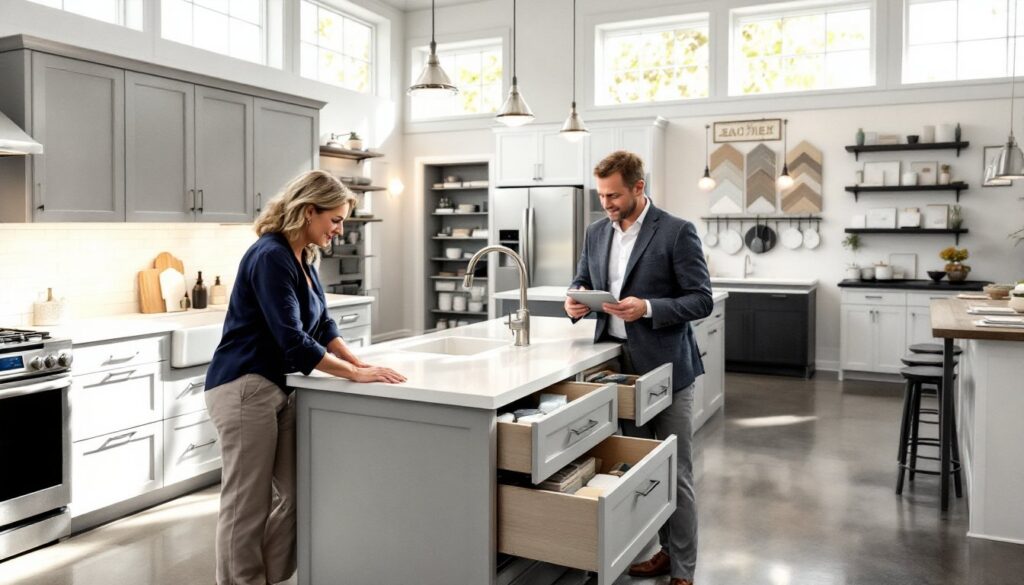
Expect to see full vignettes: a kitchen island with working drawers, a vanity with plumbing installed, tile backsplashes grouted and sealed. Many centers also have interactive design tools that let you swap finishes in real time on a digital rendering of your space. You won’t leave with a finished design on day one, this is an iterative process, but you’ll walk out with sample chips, preliminary layouts, and a clearer sense of what’s achievable within your constraints.
How to Prepare Before Your Appointment
Don’t show up empty-handed. Bring a tape measure, your room dimensions, and photos from multiple angles (include any weird corners, angled ceilings, or existing plumbing locations). If you have existing cabinetry you’re keeping, note the brand and model, it affects whether you can match finishes or need to replace everything.
Collect inspiration images, but be specific about what you like. “I want a modern farmhouse kitchen” is too vague. “I like the open shelving, white subway tile, and matte black fixtures in this photo, but I need more closed storage” gives the designer something actionable.
Know your home’s quirks. Is your house on a slab or does it have a crawlspace? Do you have PEX or copper supply lines? Is your electrical panel updated, or are you still running knob-and-tube in the walls? These details determine whether your renovation is straightforward or requires additional trades and permits. If you’re unsure, a pre-renovation inspection by a licensed contractor can save headaches later.
Top Services Offered at Kitchen and Bath Design Centers
Beyond product selection, most design centers offer space planning and layout optimization. They’ll use CAD software to create scaled drawings, showing you how shifting the sink 18 inches or moving the fridge opens up counter space. Some provide 3D walkthroughs you can view on a tablet or VR headset, useful for visualizing sightlines and traffic flow.
Many centers also provide material sourcing assistance. If you fall in love with a tile that’s discontinued, they’ll track down overstock or suggest a close match. They can coordinate with your contractor to ensure cabinet installation aligns with countertop templating and appliance delivery, timing that, if mismanaged, can leave you eating takeout for weeks.
Some design centers partner with licensed contractors and offer installation services directly, functioning as a design-build firm. Others remain design-only and provide referrals. Ask whether their designers charge a flat fee, work on commission, or roll the design cost into the product purchase. Transparency here prevents surprises.
A few higher-end centers offer project management services, acting as a liaison between you, your contractor, and product vendors. This is especially valuable if you’re managing a renovation remotely or juggling a busy schedule. They’ll handle order tracking, change orders, and on-site coordination, services that typically add 10–15% to the project cost but can save you dozens of hours.
Choosing the Right Design Center for Your Project
Start by identifying what you need. If you’re doing a cosmetic update, new backsplash, painted cabinets, updated hardware, a smaller independent center with a curated selection might be ideal. But if you’re reconfiguring a layout or dealing with structural changes (removing a load-bearing wall, relocating plumbing), look for a center with designers experienced in spatial planning and code compliance.
Check credentials. Not all “designers” have formal training. Look for certifications like NKBA (National Kitchen & Bath Association) or NCIDQ (National Council for Interior Design Qualification). These indicate the designer has passed exams covering building codes, ADA requirements, and safety standards.
Visit multiple centers and compare their product lines. Some carry budget-friendly brands like Hampton Bay or Glacier Bay, while others focus on mid-to-high-end names like Wellborn or Decora. If you have strong brand preferences, confirm availability before investing time in a design.
Ask about lead times and return policies. Can you return tile if you over-order? What happens if a cabinet arrives damaged? Who handles warranty claims, the design center or the manufacturer? According to design resources like Remodelista, product delays remain a concern in 2026, especially for custom or imported goods. A design center that proactively manages expectations and has backup vendors is worth its weight in LVP flooring.
Making the Most of Your Design Center Experience
Treat your designer as a collaborator, not a salesperson. Be upfront about your budget and timeline. If you can’t afford quartz right now but plan to upgrade in two years, say so, the designer can spec a countertop that’s easy to replace later without redoing cabinetry.
Don’t rush the material selection process. Bring samples home and view them in your actual space at different times of day. Paint colors and tile finishes shift dramatically under natural light versus LED bulbs. Most centers let you borrow samples for a few days: take advantage.
Ask about compatibility and installation requirements. Some tiles require thinset mortar and a cement backer board, while others can go over existing drywall with mastic. Certain cabinet lines have modular sizing that simplifies layout, while others are fully custom and require precise measurements. Understanding these details upfront prevents mid-project surprises.
If you’re working with a contractor, involve them early. Some contractors have preferred suppliers or installation methods. A design center unfamiliar with your contractor’s process might spec products that complicate the install. Conversely, your contractor might suggest alternatives that achieve the same look for less money. Kitchens featured on sites like The Kitchn often highlight the importance of aligning design choices with practical installation realities, something a collaborative approach ensures.
Finally, document everything. Take photos of displays you love, save finish codes and product numbers, and keep a running list of measurements and specifications. Renovations generate a blizzard of paperwork, and having a central reference file (digital or physical) prevents miscommunication and ensures the right products arrive on site.