Table of Contents
ToggleA well-designed walk-in closet isn’t just about storage, it’s about reclaiming floor space in the bedroom, making mornings smoother, and protecting your wardrobe investment. Whether you’re converting a spare bedroom, carving out space from a master suite, or building new, smart layout decisions and the right combination of shelving, hanging rods, and lighting can turn a cramped jumble into a functional dressing room. Most walk-in projects fall into the cosmetic category, meaning homeowners can tackle them without permits in most jurisdictions. But if you’re moving walls, upgrading electrical circuits, or adding HVAC, check local codes first.
Key Takeaways
- A well-designed walk-in closet maximizes storage and floor space by combining smart layouts, proper shelving, and adequate lighting for a functional dressing room.
- Plan your walk-in closet design with at least 3 feet of aisle width (4 feet for two users) and divide the space into zones for long-hang, short-hang, shoes, and accessories.
- Install 1-inch closet rods mounted to wall studs rated for at least 50 pounds, and double-hang sections to maximize vertical capacity in shorter spaces.
- Use layered lighting with recessed LED cans (50–75 lumens per square foot) and task lighting under shelves to eliminate shadows and ensure accurate color matching.
- Choose durable materials like melamine or plywood for shelving, and add smart features such as pull-out rods, sloped shoe shelves, and proper ventilation to elevate your walk-in closet.
- Test your finished walk-in closet by simulating your morning routine to ensure aisle width, reach accessibility, and overall functionality before permanently anchoring fixtures.
Planning Your Walk-In Closet Layout
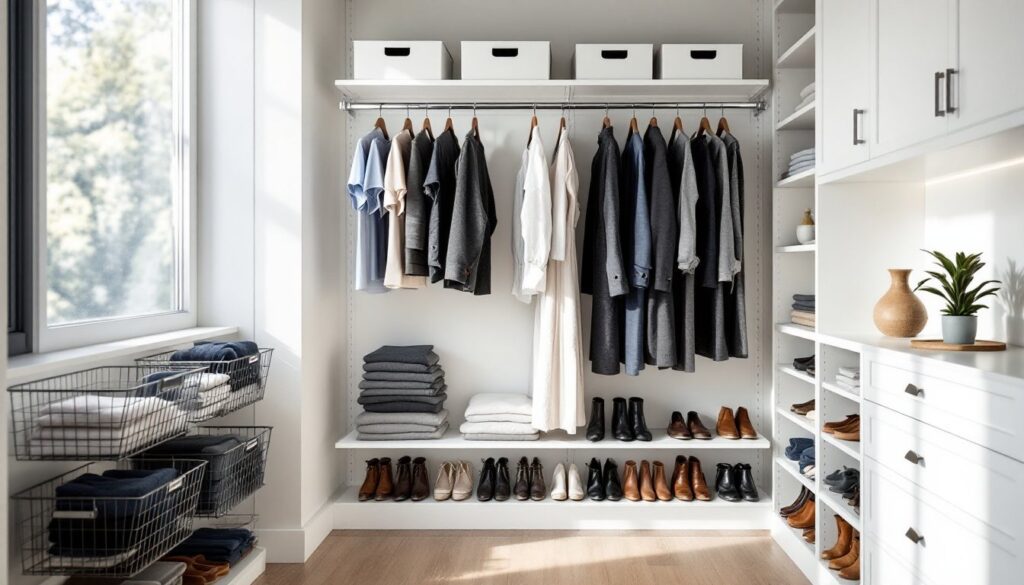
Start by measuring the actual interior dimensions of the space, length, width, and ceiling height. Note door swing direction, window placement, and any HVAC vents or electrical outlets. A functional walk-in needs at least 3 feet of aisle width between fixtures: 4 feet is better if two people will use it simultaneously.
Sketch a scaled floor plan on graph paper or use a free online planner from home design platforms to visualize fixture placement. Divide the closet into zones: long-hang (dresses, coats), short-hang (shirts, folded pants), shoe storage, accessories, and folded items. Long-hang sections require 65–70 inches of vertical clearance below the rod: short-hang needs 38–42 inches.
Consider a U-shaped or L-shaped layout for maximum wall coverage. Leave the wall opposite the entry open if the closet is narrow (under 6 feet wide) to avoid a tunnel effect. If the space is 8×8 feet or larger, an island or peninsula with drawers can anchor the center without blocking circulation.
Before buying materials, account for baseboards and crown molding, they’ll eat into your usable depth. Most closet systems are designed for walls without trim, so you may need to remove baseboards or use spacers.
Essential Storage Solutions for Maximum Organization
Shelving and Hanging Systems
Hanging rods are the backbone of any walk-in. Use 1-inch or 1-5/16-inch diameter closet rods (not dowels) and mount them to wall studs or blocking with flanges rated for at least 50 pounds. A fully loaded rod of winter coats can exceed 100 pounds, so don’t rely on drywall anchors alone.
Double-hang short-hang sections to double capacity: install one rod at 40 inches and another at 80 inches. Secure the upper rod with a center support bracket every 4 feet to prevent sagging.
For shelving, melamine-coated particleboard or ventilated wire shelving are the budget standards. Melamine is stiffer and looks cleaner but requires edge banding. Wire allows airflow and easier visibility but can leave crease marks on knits. Span shelves no wider than 36 inches without a center support, or 48 inches if using ¾-inch plywood with a hardwood edge.
If the closet has drywall on only one side (common in new construction), mount a cleat (a horizontal 1×4 or metal strip) into studs to support the back edge of shelves. Front edges can rest on metal standards and brackets for adjustability.
Drawer and Cabinet Options
Built-in drawers keep small items contained and reduce visual clutter. Standard drawer boxes should be 12–16 inches deep to fit folded sweaters, jeans, or undergarments. For sock and accessory drawers, go shallower: 4–6 inches.
Use soft-close undermount slides rated for the drawer’s weight. Side-mount slides are cheaper but eat into interior width. If building custom drawer boxes, Baltic birch plywood is stable and doesn’t require veneer.
Cabinets with doors work well for off-season storage or items you’d rather hide. A floor-to-ceiling cabinet in one corner can house luggage, gift wrap, or a safe. Keep cabinet depth at 14–16 inches if the aisle is tight: 24 inches is fine for larger closets.
Many organization experts recommend a mix of open shelving and closed storage to balance accessibility with a clean look.
Lighting Design That Makes a Difference
Good lighting prevents the ‘does this match?’ guessing game. A single ceiling fixture won’t cut it, you’ll cast shadows on your clothing. Plan for layered lighting: general overhead, task lighting at eye level, and accent lighting inside cabinets or along top shelves.
Recessed LED cans (4-inch or 6-inch) spaced every 4–6 feet provide even ambient light. Aim for 50–75 lumens per square foot in a closet. Choose bulbs with a color temperature of 3000–4000K (bright white) so colors look accurate.
For task lighting, mount LED strip lights or puck lights under shelves and above hanging rods. This eliminates shadows when browsing. Battery-operated puck lights work for quick retrofits, but hardwired strips offer better longevity and consistent brightness.
If you’re running new wiring, install switches near the entry and consider a motion sensor or timer switch to save energy. All electrical work must comply with the National Electrical Code (NEC), closets are considered habitable spaces, so fixtures must be enclosed and rated for the location. If you’re adding circuits or upgrading a panel, hire a licensed electrician.
Safety note: Never use exposed incandescent bulbs near fabrics, they’re a fire hazard. Stick with cool-running LEDs.
Materials and Finishes for Your Custom Closet
Material choice hinges on budget, aesthetics, and whether you’re DIYing or hiring out. Melamine panels (particleboard with a thermally fused finish) are the workhorse of closet systems, durable, moisture-resistant, and available in white, almond, or wood-grain patterns. Cut edges need iron-on or peel-and-stick edge banding to prevent chipping.
Plywood (½-inch or ¾-inch) is stronger and holds screws better but costs more and requires paint or veneer. If painting, prime all sides with a stain-blocking primer to prevent tannin bleed and warping.
Solid wood (pine, poplar, or hardwoods) elevates the look but requires more joinery skill. Use pocket screws or biscuit joints for cleaner assembly. Allow lumber to acclimate in the space for 48 hours before cutting to minimize expansion or contraction.
For hanging rods, skip wooden dowels, they sag. Use steel or chrome closet rods with a wall thickness of at least 0.05 inches. Flanges should attach with #8 or #10 screws driven into studs or blocking.
Finishes matter for durability. Semigloss or satin paint resists scuffs better than flat. If staining wood, apply two coats of polyurethane (satin or semigloss) to protect against oils from clothing and hands. Many design portfolios on professional platforms showcase a range of finish combinations.
PPE reminder: Wear a dust mask or respirator when cutting melamine or MDF (the dust is fine and irritating), safety glasses, and hearing protection if using a circular saw or miter saw for extended periods.
Smart Features and Accessories to Elevate Your Design
Small upgrades can make a big difference. Pull-out valet rods (spring-loaded or fixed) let you stage outfits or air garments. Mount them 42–48 inches high, within easy reach.
Sloped shoe shelves or cubbies keep pairs visible and organized. Allow 7–8 inches of width per pair and angle shelves at 15–20 degrees to prevent tipping. Adjustable shelving on standards lets you tweak spacing as your collection grows.
For accessories, install hooks or pegs on end panels or inside cabinet doors for belts, scarves, and bags. Jewelry trays with felt liners inside shallow drawers prevent tangling. Tie and belt racks that pull out or slide make use of narrow gaps.
A full-length mirror is essential, mount it on the back of the door, on a side wall, or inside a cabinet door. Use mirror clips or adhesive mounts rated for the mirror’s weight: a 48-inch mirror can weigh 30 pounds.
Ventilation matters in walk-ins, especially if the space lacks a return air vent. A small USB or battery-powered fan or a louvered door improves airflow and prevents musty odors. If the closet is interior (no exterior walls), a passive air vent or door undercut helps.
For tech enthusiasts, a charging drawer with a built-in power strip keeps devices organized. Route cables through a grommet to keep them tidy.
Final check: Stand in the finished space and simulate your morning routine. Can you reach everything without a step stool? Is the aisle wide enough to bend down for shoes? Adjust before anchoring everything permanently. Most closet systems are modular, so tweaking is part of the process.