Table of Contents
ToggleBuilding a deck doesn’t have to drain your savings. With smart material choices, strategic design, and a willingness to handle some of the work yourself, homeowners can create a functional, attractive outdoor space for a fraction of what a full-service contractor charges. The average deck project costs between $4,000 and $10,000, but budget-conscious builders regularly complete small deck designs for $1,500 to $3,000 by making informed trade-offs. This guide walks through practical strategies for building a backyard deck on a budget, from selecting economical lumber to cutting labor costs with DIY techniques, without sacrificing structural integrity or longevity.
Key Takeaways
- Pressure-treated lumber is the most economical material for backyard deck ideas, costing just $2–$4 per square foot and lasting 15–25 years with proper maintenance.
- A simple rectangular design at ground level saves money by minimizing cutting waste, reducing labor complexity, and often eliminating railing costs.
- DIY deck building can save $2,000–$6,000 in labor costs by handling permits yourself, renting specialized tools, and enlisting help for critical tasks like footing installation.
- Pressure-treated wood requires annual maintenance including cleaning and sealing ($50–$100 yearly), which prevents costly repairs and extends deck lifespan significantly.
- Budget-conscious homeowners can complete functional backyard decks for $1,500–$3,000 by prioritizing structural integrity first and adding features like built-ins, lighting, and privacy screens later as funds allow.
Why Choose Budget-Friendly Deck Materials
Material selection drives the majority of deck costs. Premium options like composite decking or tropical hardwoods (ipe, cumaru) can run $8–$15 per square foot just for boards, while budget-friendly alternatives deliver solid performance at a fraction of the price.
The key is matching material durability to your climate, maintenance tolerance, and expected lifespan. A deck built from inexpensive materials that requires replacement in five years isn’t actually budget-friendly, it’s deferred expense.
Pressure-Treated Wood: The Economical Classic
Pressure-treated southern yellow pine remains the workhorse of inexpensive deck ideas. At $2–$4 per square foot for decking boards and $8–$15 per post, it’s the most accessible option for DIYers. The wood is infused with chemical preservatives (typically copper-based compounds like ACQ or CA-B) that resist rot, insects, and moisture damage.
When shopping, look for ground-contact rated lumber (0.40 pcf retention) for posts and joists that touch soil or concrete, and above-ground rated (0.25 pcf) for decking and railings. Check the moisture content stamp, ideally below 19% to minimize warping as the wood dries.
Pressure-treated lumber requires annual maintenance: cleaning, sanding rough spots, and applying a water-repellent stain or sealer. Budget $50–$100 annually for a 200-square-foot deck. The payoff is a lifespan of 15–25 years with proper care.
Alternative budget materials include cedar (naturally rot-resistant but pricier at $4–$8 per square foot) and construction-grade pine treated with topical sealers (suitable only for covered or elevated decks in dry climates). Avoid untreated softwoods for ground-level or high-moisture applications, they’ll rot within 3–5 years.
Design Strategies to Maximize Value and Style
Smart design reduces material waste, simplifies construction, and stretches your budget further. Small backyard deck ideas often deliver better cost-per-square-foot value than sprawling multi-level designs.
Keep the footprint simple. Rectangular or square decks minimize cutting waste and structural complexity. A 12×16-foot deck uses standard lumber dimensions (joists at 16 inches on-center spanning 12 feet) without custom cuts. Angled corners, curves, and multi-level designs increase labor hours and scrap rates by 20–30%.
Build at grade. Ground-level decks (less than 30 inches above grade) often skip railing requirements per IRC code, saving $15–$25 per linear foot. They also require shorter posts and simpler footings. Check local code, some jurisdictions mandate railings regardless of height.
Use standard spacing and spans. Pressure-treated 2×8 joists span up to 12 feet at 16-inch spacing: 2×10s reach 16 feet. Design your deck dimensions to match these spans and you’ll avoid oversized beams or extra posts. Recent studies on deck construction show that optimized joist spacing can reduce lumber costs by 15–20%.
Skip the built-ins. Benches, planters, and pergolas look great but add material and time. Build a basic platform first: add features later as budget allows. A 10×12-foot deck with built-in benches costs 30–40% more than the same footprint with standalone furniture.
Choose straightforward railing. If code requires railings, simple 2×2 balusters at 4-inch spacing (per IRC) cost less than decorative metal panels or cable systems. Pressure-treated 4×4 posts with 2×4 top and bottom rails run $12–$18 per linear foot in materials.
DIY Deck Building Tips to Cut Labor Costs
Labor typically accounts for 50–60% of professional deck installation costs. Tackling the project yourself can save $2,000–$6,000 on a small to mid-sized deck, even if you need to rent tools.
Get the permit yourself. Many jurisdictions require deck permits for structures over 200 square feet or 30 inches high. Pulling the permit yourself ($150–$500) instead of paying a contractor’s markup saves money and ensures you understand code requirements. Expect a footing inspection before pouring concrete and a final framing inspection.
Rent specialized tools. A power auger for digging footing holes rents for $50–$80 per day and turns a two-day hand-digging job into a two-hour task. A compound miter saw ($40–$60 per day) delivers cleaner cuts than a circular saw for railings and trim. For most DIY deck builders, renting beats buying tools used once.
Enlist help for key tasks. Mixing and pouring concrete footings, setting beams, and installing joists go faster and safer with a second person. Budget a case of beer or pizza for a friend, it’s still cheaper than hiring labor at $50–$80 per hour.
Follow the ledger attachment to the letter. If attaching the deck to your house, the ledger board is a critical structural and waterproofing element. Use galvanized lag screws or through-bolts (not nails) spaced per code, typically every 16 inches into the rim joist. Flash the top edge with self-adhering waterproof membrane and Z-flashing to prevent water intrusion. Ledger failure is the leading cause of deck collapse.
Pre-drill and countersink. Pressure-treated wood splits easily. Pre-drill all screw holes near board ends and use galvanized or coated deck screws rated for ACQ-treated lumber. Standard screws corrode within 2–3 years. The best practices for material selection also apply to fasteners and hardware.
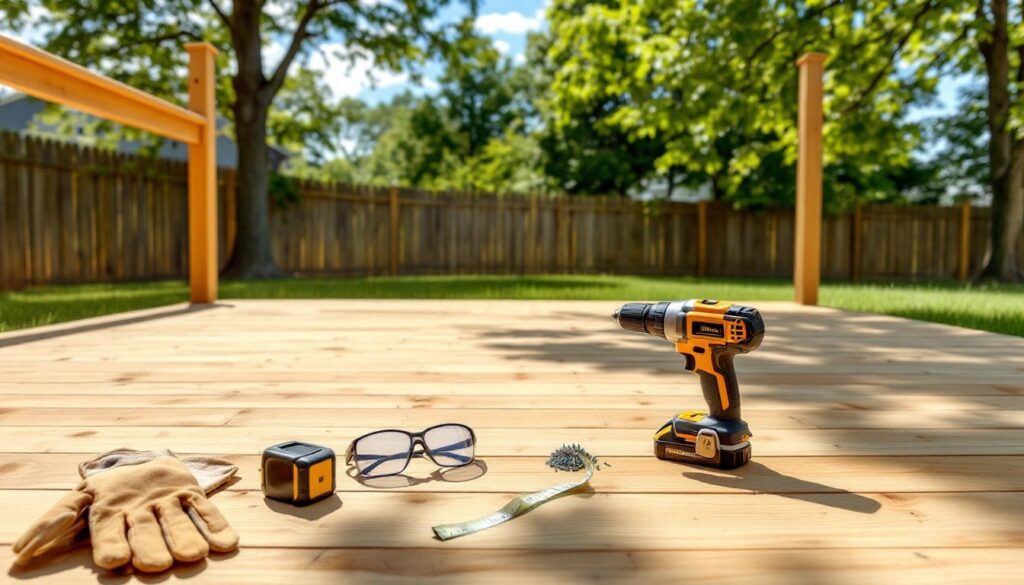
Safety gear is non-negotiable. Wear safety glasses when cutting, work gloves when handling treated lumber, and hearing protection when operating power tools for extended periods. A dust mask is essential when cutting pressure-treated wood, copper compounds in the preservative are respiratory irritants.
Creative Finishing Touches on a Tight Budget
A basic deck platform is functional, but a few inexpensive upgrades make it feel intentional and welcoming.
Stain or seal immediately. Pressure-treated wood ships wet from the treatment process. Let it dry 2–6 months (check with the “water bead test”, drops should soak in, not bead up), then apply a semi-transparent penetrating stain or water-repellent sealer. This costs $30–$75 per gallon (covers 150–250 square feet) and dramatically extends wood life. Skip paint, it traps moisture and peels.
Add perimeter lighting. Solar post cap lights ($8–$15 each) require no wiring and provide ambient lighting for evening use. For a 12×16 deck with six posts, that’s under $100. Battery-powered LED string lights ($20–$40) add atmosphere without an electrician.
Use outdoor rugs and portable furniture. An outdoor rug ($50–$150) defines seating areas and hides minor surface imperfections. Resin or aluminum furniture is lighter and cheaper than wood or wrought iron. Watch for end-of-season clearance sales, patio furniture drops 50–70% in late summer.
Incorporate planters and container gardens. Galvanized stock tanks ($40–$80) make sturdy, modern planters for perennials or small shrubs. Elevate them on casters for easy rearranging. Vertical gardens using pallet wood (often free from construction sites) add greenery without consuming deck space.
Create privacy with lattice or fabric. Pressure-treated lattice panels ($15–$30 per 4×8 sheet) can be framed and attached as privacy screens. For temporary solutions, outdoor curtains on cable or conduit rods provide shade and seclusion. Drape them around posts for a flexible enclosure.
Money-Saving Maintenance and Long-Term Care
Cheap deck ideas stay cheap only if the structure lasts. Deferred maintenance turns budget builds into money pits.
Clean annually. Sweep debris weekly to prevent moisture trapping. Once a year, scrub with a deck cleaner (oxygen bleach-based, $15–$25 per gallon) and a stiff brush to remove mildew, tannins, and dirt. Rinse thoroughly. Power washers work but can damage soft wood if set too high (keep pressure below 1,500 PSI and use a fan tip).
Reapply sealer every 2–3 years. Water-repellent sealers wear faster than stains. Test by sprinkling water on the deck, if it beads up, you’re good: if it soaks in, it’s time to reseal. Budget $50–$100 in materials and a half-day of labor.
Inspect fasteners and structure. Once a year, check for popped screws, loose railing, or wobbly posts. Tighten or replace fasteners as needed. Look for signs of rot around footings and ledger attachments, soft, spongy wood means water intrusion. Addressing small issues prevents expensive repairs.
Replace damaged boards promptly. Cracked or splintered deck boards are trip hazards and allow water to penetrate the substructure. Pull and replace individual boards rather than waiting for widespread failure. Keep a few spare boards from the original build for patching.
Ventilate the underside. Ground-level decks trap moisture if vegetation grows up around the perimeter. Trim plants back and ensure 12–18 inches of clearance for airflow. For elevated decks, ensure joist bays aren’t blocked by insulation or debris, trapped moisture accelerates rot.
Conclusion
Building a backyard deck on a budget requires thoughtful material selection, simplified design, and a DIY approach to labor, but it’s entirely achievable for most homeowners. Pressure-treated lumber, ground-level or simple elevated designs, and sweat equity can deliver a functional outdoor space for $1,500–$3,000. The most successful budget deck projects focus on getting the structure right first, then adding finishing touches over time as funds allow. With routine maintenance, even an inexpensive deck can provide 15–25 years of outdoor living.