Table of Contents
ToggleA well-chosen patio door does more than connect your home to the backyard, it defines how natural light flows, how your rooms feel, and how smoothly you move between indoor and outdoor spaces. Whether you’re replacing an outdated slider or adding a new opening during a remodel, the right design balances style, function, and your home’s structural realities. From sleek sliders to expansive bi-folds, today’s options offer more flexibility than ever. This guide covers the most popular backyard door ideas, frame materials, glass choices, and finishing touches to help homeowners and DIYers make confident decisions.
Key Takeaways
- Patio door design ideas range from space-saving sliders to dramatic bi-folds, each offering different benefits for ventilation, light, and access to outdoor spaces.
- Sliding glass doors remain the most practical choice for most homes, requiring no swing clearance and handling heavy use, but bi-fold options create openings up to 20+ feet for maximum indoor-outdoor flow.
- Frame material significantly impacts maintenance, insulation, and aesthetics—vinyl is budget-friendly, aluminum suits modern styles, wood provides classic elegance, and fiberglass balances durability with design flexibility.
- Glass specifications determine energy efficiency and comfort more than frame style; low-E coatings, insulated units, and proper pane thickness are essential investments for reducing utility costs.
- French doors offer traditional elegance but require careful attention to weatherstripping, hinge quality, and outswing clearance, making them better suited for formal spaces than high-traffic areas.
- Professional installation is critical for patio doors, especially bi-folds and doors requiring load-bearing wall modifications—verify your home’s header capacity and local building codes before proceeding.
Sliding Glass Doors: Sleek and Space-Saving Solutions
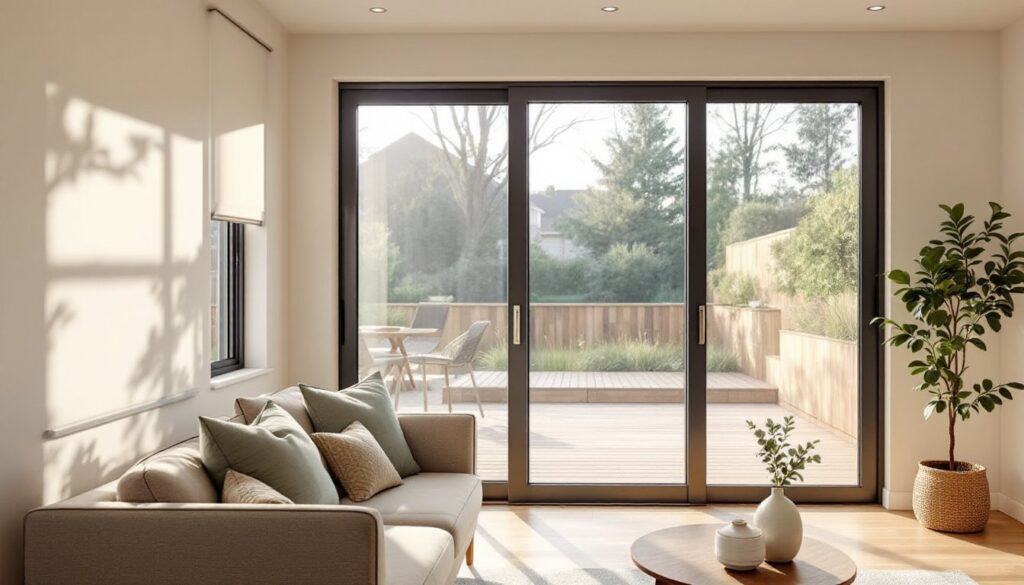
Sliding glass doors remain a workhorse choice for back patio door ideas, they require no swing clearance, work in tight layouts, and handle heavy use without fuss. Standard two-panel units span 5 to 8 feet wide, while three-panel configurations stretch to 12 feet or more, flooding rooms with light.
Most sliding doors ride on bottom-rolling tracks with adjustable rollers. Quality units use stainless-steel or nylon wheels: cheap rollers bind and wear out fast. The active panel should glide with one-finger pressure when properly adjusted. Look for multi-point locking systems that engage at the top, middle, and bottom of the frame, single-latch locks are easier to force.
Lift-and-slide mechanisms, common in European designs, raise the sash slightly when the handle turns, reducing friction and extending roller life. They cost more but operate smoothly even at 10+ feet wide.
Installation requires a level, structurally sound opening. Check for a proper header, sliding doors are heavy (150–300 pounds for a standard unit), and undersized headers sag over time. Most jurisdictions require tempered or laminated glass per IRC glazing standards. If you’re replacing an existing unit, measure the rough opening, not the old door: frames vary by manufacturer.
Single-panel sliders leave half the opening blocked. For maximum ventilation, consider a center-opening sliding door where both panels move, or look at bi-fold options covered below.
French Patio Doors: Classic Elegance Meets Modern Function
French doors swing open on hinges, offering a traditional look with full-width access when both panels open. Standard widths run 5 to 6 feet (two 30- or 36-inch doors), though custom sizes accommodate wider openings. They work well in formal dining rooms or master suites where the classic divided-light aesthetic fits the home’s architecture.
Inswing vs. outswing matters more than you’d think. Inswing doors eat floor space and require careful furniture placement: outswing units keep interiors clear but need a covered patio or landing, IRC requires a landing at least 36 inches deep at exterior doors. Outswing hinges also face weather exposure: use ball-bearing or continuous hinges rated for exterior use, and check that hinge pins are non-removable or pinned for security.
Divided-light grilles (muntins) come as true divided lites (individual panes), simulated divided lites (grilles between glass layers), or snap-in grilles. True divided lites match historical homes but are harder to clean and less energy-efficient. Simulated grilles offer the look with better thermal performance.
French doors need a sturdy threshold and weatherstripping on all four sides. The meeting stile (where the two doors join) uses an astragal, a vertical seal, on one door: the other latches into it. Quality astragals have adjustable compression gaskets. Poor weatherstripping is the #1 complaint with French doors, so inspect seals before buying.
They’re not ideal for high-traffic areas or small kids who forget to close doors gently, hinges and glass take more abuse than sliders.
Folding and Bi-Fold Doors: Maximize Your Opening
Bi-fold and multi-fold systems, sometimes called accordion doors, stack panels to one or both sides, creating openings up to 20+ feet wide. They’re the go-to for large patio door ideas that erase the line between indoors and out. Expect to pay 2–3× the cost of standard sliders, and budget for professional installation unless you’re comfortable with precise shimming and multi-panel alignment.
Panels hang from a top track on wheeled carriers, with a bottom guide or pivot pin keeping them in line. Top-hung systems handle weight better and avoid bottom-track dirt buildup, but they require a reinforced header, calculate total door weight (often 400–800 pounds) and confirm your framing can support it. Consult a structural engineer if you’re cutting into a load-bearing wall.
Panel count affects usability. A four-panel unit (two panels folding each direction) is manageable: eight panels get cumbersome and require smooth operation to avoid binding. Test the floor mechanism, some cheaper systems use flimsy plastic guides that crack.
Weatherproofing is trickier than fixed doors. Each panel junction needs interlocking seals, and the threshold must shed water without tripping people. Some systems use a flush sill (zero step) with internal drainage channels: others require a low threshold (½ to ¾ inch). Check local codes, some areas mandate thresholds for structural or water-resistance reasons.
Bi-folds shine in mild climates and covered patios. In harsh weather or high-wind zones, they’re less forgiving than traditional doors. If you live where winter wind chill is a concern, pay extra for thermally broken frames and multi-pane insulated glass.
Choosing Frame Materials That Match Your Home’s Style
Frame material impacts looks, maintenance, energy performance, and cost. Most homeowners narrow it down to four options, each with trade-offs.
Vinyl frames dominate the budget and mid-range market. They won’t rot, never need paint, and insulate reasonably well (multi-chamber extrusions perform better than single-wall profiles). Downsides: limited color options (white, tan, gray), and they can’t be repainted. Vinyl expands and contracts more than other materials, so quality units use welded corners and reinforced sashes. Expect 20–30 years of service if installed correctly.
Aluminum frames are strong, slim, and low-maintenance, making them popular for modern or commercial-style homes. Bare aluminum conducts heat and cold readily, look for thermally broken frames with a plastic isolator between interior and exterior sections. Anodized or powder-coated finishes resist corrosion: bare aluminum pits in coastal environments. Aluminum handles larger glass panels than vinyl without flexing.
Wood frames deliver classic looks and top-tier insulation but require upkeep. Clad wood, wood interior, aluminum or vinyl exterior, gives you the best of both worlds. Common species include pine (affordable, paint-grade), fir (moderate durability), and mahogany or oak (premium). Wood doors need exterior-grade finish or stain reapplied every few years. If neglected, moisture intrusion leads to rot at the sill and bottom rail. They’re worth it if your home’s trim and windows are wood, but not a great fit for low-maintenance households.
Fiberglass frames combine wood-like insulation with durability approaching aluminum. They accept paint or stain, resist warping, and handle temperature swings well. Cost sits between wood and aluminum. Fiberglass hasn’t reached the market penetration of vinyl or aluminum, so local installer availability may be limited. Matching ideas for patio doors in various styles becomes easier with fiberglass, especially for those blending traditional and contemporary elements.
Glass Options: Privacy, Energy Efficiency, and Light Control
Glass makes up 70–80% of a patio door’s surface, so choices here shape comfort, utility bills, and privacy more than frame style.
Insulated glass units (IGUs) pair two or more panes with an air or gas-filled space between them. Argon fill is standard and improves insulation: krypton costs more and works better in narrow gaps (common in triple-pane units). Spacers matter too, metal spacers conduct heat: foam or fiberglass spacers reduce edge condensation.
Low-E (low-emissivity) coatings reflect infrared light, keeping heat in during winter and out during summer. Coatings vary by solar heat gain coefficient (SHGC) and U-factor. High SHGC (0.5+) admits solar heat, good for cold climates: low SHGC (below 0.3) blocks heat, ideal for cooling-dominated regions. U-factor measures insulation: lower is better. A typical double-pane low-E door might hit U-0.30: triple-pane or advanced coatings reach U-0.20. Energy Star thresholds vary by climate zone, so check requirements for your area.
Tempered glass is code-required for patio doors (IRC Section R308.4). It shatters into small, blunt pieces rather than dangerous shards. Laminated glass sandwiches a plastic interlayer between panes: it holds together when broken, offering better security and sound dampening. Some hurricane-prone jurisdictions require impact-rated glass that withstands debris strikes.
For privacy without blocking light, consider obscured or textured glass on one panel, or frosted film applied post-installation. Tinted glass reduces glare and solar heat but may look dark from inside. Electrochromic (smart) glass tints on demand via a switch, it’s pricey ($100+ per square foot) and overkill for most homes, but dramatic in high-end builds.
Glass thickness typically runs ⅛ inch per pane for residential doors. Larger or floor-to-ceiling units may use ³⁄₁₆ inch glass to prevent flexing. Always verify that panes are properly sealed in the frame with setting blocks and continuous glazing tape or sealant, improper glazing causes rattles and leaks.
Styling Your Patio Door With Hardware and Window Treatments
Hardware and treatments turn a functional door into a design statement. Small details make a big difference, and most are DIY-friendly upgrades.
Handles and locks come in dozens of finishes, brushed nickel, oil-rubbed bronze, matte black, and polished chrome are current favorites. Match existing door hardware for a cohesive look. Sliding door handles mount internally or externally: external (surface-mount) handles are easier to replace. Multi-point locks add security and pull the door tight against weatherstripping. If you have young kids, consider a foot lock or flip latch at the top of the frame.
French door handles (lever sets or knobs) should include a deadbolt on the active door and flush bolts top and bottom on the stationary panel. Upgrading to a handleset with an exterior keyhole and interior thumb-turn increases security and curb appeal.
Window treatments for patio doors need to clear the swing radius (for hinged doors) or stack neatly when open (for sliders). Vertical blinds are practical but dated: newer options include:
- Cellular shades that mount inside the frame and accordion up, offering insulation and light filtering.
- Panel track blinds (sliding fabric panels) that glide on a top rail, clean-lined and modern.
- Roller shades in sheer or blackout fabrics: motorized versions raise with a remote.
- Curtains or drapes on a ceiling-mount or wall-mount rod extending 6–12 inches beyond the frame. Use a traverse rod for easy opening or a double rod to layer sheers and blackout panels.
For treatments influenced by broader home design decor trends, layering textures and choosing cohesive color palettes can tie a patio door into the rest of the room.
Don’t forget the exterior. A retractable screen door keeps bugs out without blocking the view. Fixed screens come standard with most doors, but retractable units (side-mount or ceiling-cassette styles) disappear when not needed. Motorized screens cost more but pair well with bi-fold doors.
Conclusion
Choosing the right patio door means balancing style preferences with structural realities, climate demands, and how the space gets used. Sliders work for most situations, French doors suit traditional homes, and bi-folds deliver drama in open-plan designs. Frame material and glass specs directly affect comfort and energy bills, so don’t shortcut research there. With the right combination and proper installation, a patio door becomes one of the most satisfying upgrades in any home.