Table of Contents
ToggleDeck railings do more than keep people from tumbling off the edge, they define the look of your entire outdoor space. Whether you’re building new or replacing worn-out balusters, choosing the right wood railing design can turn a basic deck into something worth showing off. Wood offers flexibility that metal and composite can’t match: you can cut, shape, stain, and customize it to fit nearly any style, from cottage-cozy to sleek and modern. This guide walks through six popular wood deck railing designs, covering materials, construction tips, and what works best for different architectural styles and skill levels.
Key Takeaways
- Wood deck railing ideas range from classic vertical balusters to modern horizontal slats, each offering different aesthetics and code compliance considerations.
- Cedar, redwood, and Douglas fir provide superior durability and rot resistance compared to pressure-treated pine, making them ideal material choices for long-lasting railings.
- Building codes require balusters spaced no more than 4 inches apart to prevent climbing hazards, so accurate spacing with a jig ensures safety and compliance.
- Cable and wood hybrid railings deliver unobstructed views but demand strong post anchoring and professional-grade tensioning equipment for structural integrity.
- Decorative cutout patterns and rustic log railings require intermediate to advanced woodworking skills but transform basic decks into custom outdoor focal points.
- Proper weatherproofing, routine sealing every 2-3 years, and correct post anchoring through deck framing extend railing lifespan to 15-20 years.
Classic Vertical Balusters for Timeless Appeal
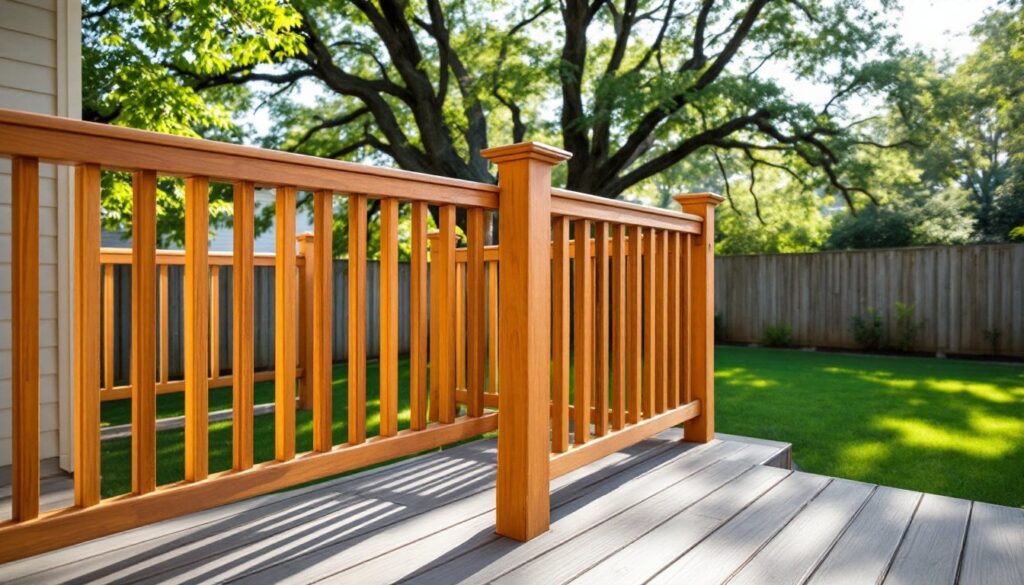
Vertical balusters remain the most common deck railing design for good reason: they’re code-compliant, straightforward to install, and work with nearly any home style. Most jurisdictions require balusters spaced no more than 4 inches apart (measured as the largest sphere that can pass through), making this one of the safest options for homes with kids or pets.
Material choices matter here. Pressure-treated pine is the budget-friendly standard, but it requires regular staining or sealing to prevent warping and splitting. Cedar and redwood resist rot naturally and age to a silver-gray patina if left untreated, though they cost roughly 1.5 to 2 times more than treated lumber. For a premium look, consider vertical-grain Douglas fir, which takes stain beautifully and resists cupping better than flat-sawn boards.
Installation is simple: cut 2×2 balusters to height (typically 36 inches from deck surface to top rail for residential decks), then fasten them to top and bottom rails using galvanized or stainless steel screws. A spacing jig, a scrap piece of wood cut to 3.5 inches, keeps gaps uniform without constant measuring. Predrill screw holes to prevent splitting, especially near board ends.
For a decorative touch without complicating the build, try alternating baluster widths (mix 2×2 and 1×2 stock) or adding a chamfered edge with a router. These small details elevate the design while keeping construction beginner-friendly.
Horizontal Slat Railings for Modern Minimalism
Horizontal slat railings have become the go-to choice for contemporary and mid-century modern homes. The clean, uninterrupted lines create a sleeker profile than vertical balusters, and they can make a small deck feel more expansive by emphasizing width over height.
The key challenge with horizontal deck railing designs is meeting code. Since the slats run parallel to the ground, they create a ladder effect that kids can climb. Most building codes require horizontal rails to have gaps of 4 inches or less, just like vertical designs. That means you’ll need more boards, typically five to seven 1×4 or 1×6 slats between posts for a standard 36-inch rail height.
Fastening method makes or breaks the look. Visible screws can clutter the clean aesthetic, so consider these options:
- Pocket screws from the back side of each slat into the posts (requires a Kreg jig or similar)
- Hidden fasteners like TimberTech or Deckorators clips (adds cost but delivers a seamless face)
- Through-bolts with decorative caps in a contrasting metal finish (bronze or matte black work well with natural wood)
For structural posts, use 4×4 or 6×6 lumber spaced no more than 6 feet apart. Horizontal slats put more lateral stress on posts than vertical balusters, so proper anchoring is critical. Use galvanized post anchors bolted through the deck framing, not just surface-mounted brackets.
Wood species selection affects durability significantly. Ipe, cumaru, and other tropical hardwoods resist warping and last 25+ years, but they’re expensive and require carbide saw blades. For a middle-ground option, thermally modified wood (like Thermory) offers improved stability and rot resistance at a lower price point than exotics.
Decorative Cutout and Pattern Designs
If you’ve got intermediate woodworking skills and want something truly custom, decorative cutout patterns turn deck railings into functional art. Popular motifs include geometric shapes, mountain silhouettes, sunbursts, and prairie-style grids inspired by Frank Lloyd Wright.
This approach works best with ¾-inch or thicker plywood panels or solid boards wide enough to accommodate your design, typically 1×10 or 1×12 stock. Marine-grade plywood holds up better outdoors than standard exterior ply, and it takes paint or solid stain well if you’re not after a natural wood look.
Cutting the patterns requires the right tools. A jigsaw handles most curves and interior cutouts (drill a starter hole first), while a band saw gives smoother cuts on thicker stock. For crisp geometric patterns, a table saw with a crosscut sled delivers cleaner results than freehand cutting. Always wear safety glasses and a dust mask, hardwood dust is a respiratory irritant, and cutting releases plenty of it.
Weatherproofing is critical since cutouts expose more end grain. Seal all cut edges with a penetrating end-grain sealer or multiple coats of exterior polyurethane before assembly. Pay special attention to interior cutouts where water can pool.
Code compliance gets tricky here. The 4-inch sphere rule still applies, so your design can’t create openings larger than that. Test your pattern with a 4-inch ball before cutting a full set of panels. Some jurisdictions may require engineered drawings for non-standard railing designs, so check with your local building department before investing time and materials.
Cable and Wood Hybrid Railings
Cable railing systems paired with wood posts deliver an unobstructed view, ideal for decks overlooking water, mountains, or gardens you actually want to see. The stainless steel cables practically disappear from a distance, while substantial wood posts provide warmth and visual anchoring.
This isn’t a beginner project. Cable systems require serious tension (typically 200-300 pounds per cable) to prevent sagging, which puts significant stress on posts. Use 4×4 posts at minimum, though 6×6 posts are better for spans over 4 feet. Posts must be through-bolted to the deck framing with ½-inch galvanized bolts, not just lag-screwed to the rim joist.
Professional cable railing kits from manufacturers like Feeney (CableRail) or Atlantis Rail include pre-cut cables, tensioning hardware, and detailed instructions. Expect to pay $40-60 per linear foot for materials alone. DIY kits using bulk cable and generic hardware run cheaper but require more measuring and fittling.
Spacing typically runs 3 inches on center to meet most building codes. That means drilling 10-12 holes through each post for a standard 36-inch rail height, tedious work that demands precision. A drill press or at least a portable drill guide keeps holes straight and properly aligned. Misaligned holes create uneven cable runs that look sloppy and may not tension correctly.
Wood choices matter for longevity. Softwoods like pine can compress under cable tension over time, loosening the system. Hardwoods (white oak, mahogany) or dense softwoods (Douglas fir, cedar) hold up better. Many builders recommend detailed installation techniques to ensure proper tensioning and structural integrity.
Rustic Log and Branch Style Railings
For cabins, lodges, or homes in wooded settings, railings made from natural logs and branches create an organic look that blends into the surroundings. This style embraces irregularity, no two pieces match exactly, which is part of the charm.
Sourcing materials takes planning. Cedar, pine, or aspen logs in the 3-4 inch diameter range work well for posts and top rails. Smaller branches (1-2 inches diameter) serve as balusters. Cut logs in late fall or winter when sap is down, then peel the bark within a few days to prevent insect damage. Unpeeled logs look natural but invite carpenter ants and powder post beetles.
Let wood dry for at least 3-6 months in a covered, ventilated area before installation. Green wood will shrink and crack as it dries, loosening joinery and creating gaps. Some builders prefer the weathered look of checking and splits: others fill major cracks with exterior wood filler or epoxy.
Joinery options include:
- Notched saddle joints where branches meet posts (cut with a chainsaw or reciprocating saw, then chisel to fit)
- Screws driven at angles through smaller branches into rails or posts
- Galvanized nails or deck screws with washers for a more industrial-rustic hybrid
Code compliance is challenging with irregular branch spacing. Measure carefully to keep gaps under 4 inches, which may mean using more branches than looks ideal. Some jurisdictions allow wider spacing if the railing height exceeds 36 inches and the deck is less than 30 inches above grade, check local requirements.
Finish with a clear exterior sealer or penetrating oil to slow weathering without hiding the wood’s natural character. Reapply every 2-3 years, especially on horizontal surfaces where water sits.
Lattice and Crosshatch Wood Patterns
Lattice panels and crosshatch designs offer privacy without solid walls, plus they provide built-in support for climbing plants. Pre-made 4×8 lattice sheets (available in pine, cedar, or vinyl-clad wood) install quickly and cost $30-80 per panel depending on material and grid spacing.
Standard lattice comes in diagonal or square grid patterns with 1.75-inch or 2.75-inch openings. The smaller spacing meets most deck codes without modification. Frame panels with 1×4 or 2×2 trim to hide cut edges and provide attachment points. Secure the frame to deck posts with exterior screws, then attach lattice to the frame using 1-inch brad nails or narrow crown staples, overdriving fasteners splits the thin lattice strips.
For a sturdier, more custom look, build crosshatch patterns from scratch using 1×2 or 1×3 boards. This takes more time but allows you to control spacing and create bolder visual impact. Lay out horizontal pieces first, then weave or overlay vertical pieces. Secure intersections with 1¼-inch exterior screws or brad nails. A pneumatic brad nailer speeds up the work significantly.
Painting or staining lattice before installation is far easier than trying to brush between all those gaps afterward. Lay panels flat and use a paint sprayer or foam roller for even coverage. Two coats of solid stain or exterior paint provide the best weather protection.
One practical consideration: lattice catches leaves and debris. If you’re surrounded by deciduous trees, expect to spend time cleaning out the grid each fall. Design variations and installation methods can help you choose patterns that balance aesthetics with maintenance. For lower-maintenance options, consider wider grid spacing or angled lattice that sheds debris more easily.
Conclusion
The right deck railing balances safety, style, and what you’re actually willing to maintain. Vertical balusters and horizontal slats cover most situations without overthinking it, while decorative cutouts and cable hybrids add personality if you’ve got the skills and budget. Whatever design you choose, prioritize proper post anchoring, accurate spacing for code compliance, and thorough sealing, especially on end grain and cutouts. A well-built wood railing should last 15-20 years with routine maintenance, and free plans and detailed tutorials can guide you through the build process step-by-step.